Fundamentals
Synthetic Long
A synthetic long involves buying a call option and selling a put option with the same strike price and expiration date. Investors may use a synthetic long when seeking exposure similar to owning the underlying stock without purchasing shares directly. Synthetic longs allow investors to potentially benefit from upward price movement using options contracts.
- Outlook: Bullish
- Use: Primarily used when expecting the stock price to rise and seeking stock-like exposure through options
- Profit: You may profit if the stock price rises above the strike price, similar to owning shares outright
- Loss: You may incur losses if the stock price falls significantly below the strike price, which can be substantial
Risks
Synthetic longs can provide stock-like exposure using options, but the strategy carries substantial downside risk because of the short put position. If the stock price declines sharply, losses may resemble those of owning the stock outright. Investors should also consider assignment risk, margin requirements, and implied volatility.
Basic example
Let’s say FlyFit is trading at $100 and you expect the stock price to rise. You establish a synthetic long by buying one $100 call for $6 and selling one $100 put for $4.
- Strike price: $100Both contracts use the same strike price and expiration date.
- Contract prices: $6 Long Call, $4 Short PutPer-share premium for each option leg
- Total cost: ($6 - $4) x 100 = $200The total debit paid is equal to the premium paid for the call option less the premium received for the put option.
Maximum profit and loss
The P/L calculations take into consideration both the long call and short put positions.
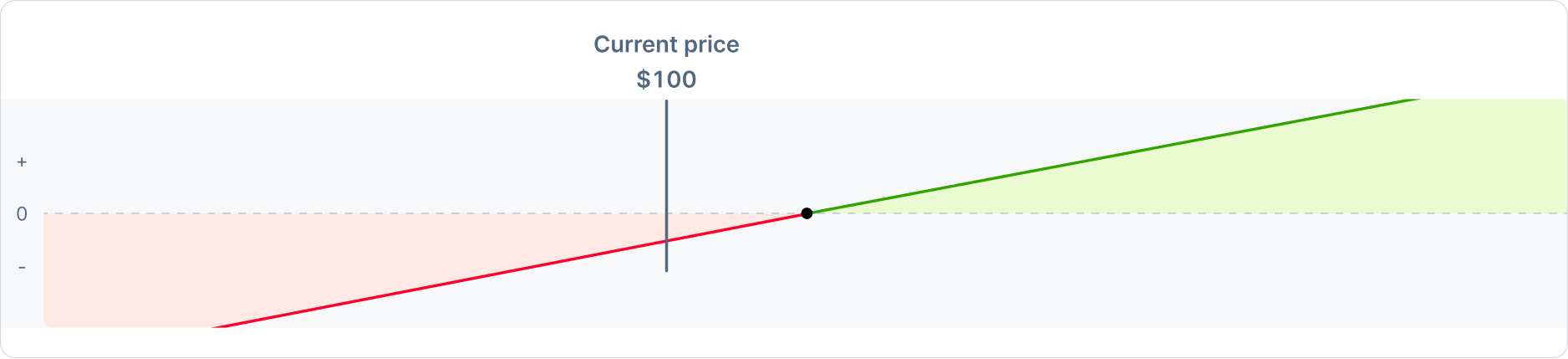
- Max loss: SubstantialLosses can continue increasing as the stock price declines.
- Breakeven: $102Strike price + net premium paid
- Max profit: UnlimitedThe maximum profit is theoretically unlimited because the stock price can continue rising.
Profit if...
FlyFit’s stock price rises above the breakeven.
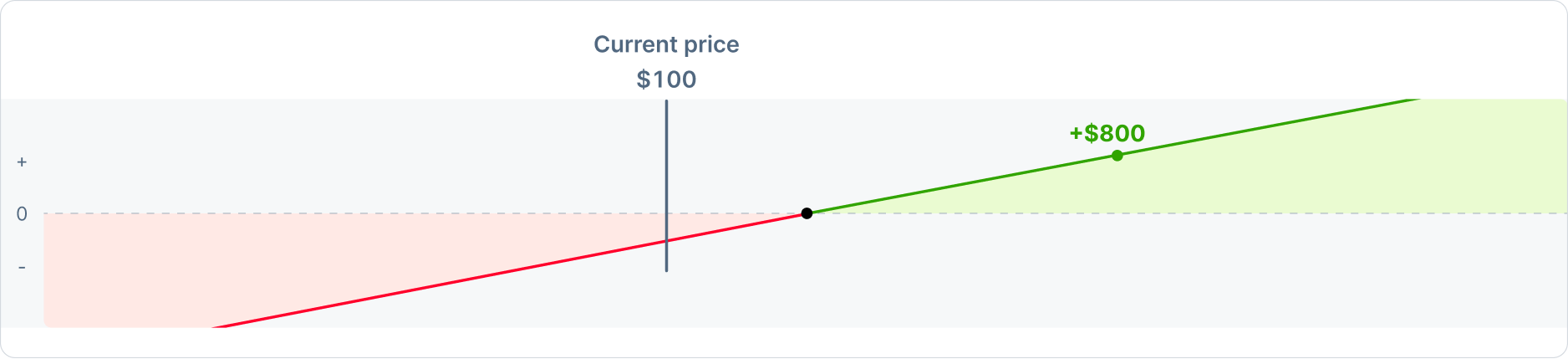
- Total profit: ($110 - $100 - $2) x 100 = $800Difference between the current stock price and the strike price, less the net premium paid
If FlyFit rises to $110 at expiration, the call option gains intrinsic value while the put expires worthless.
Loss if...
FlyFit’s stock price falls significantly below the strike price.
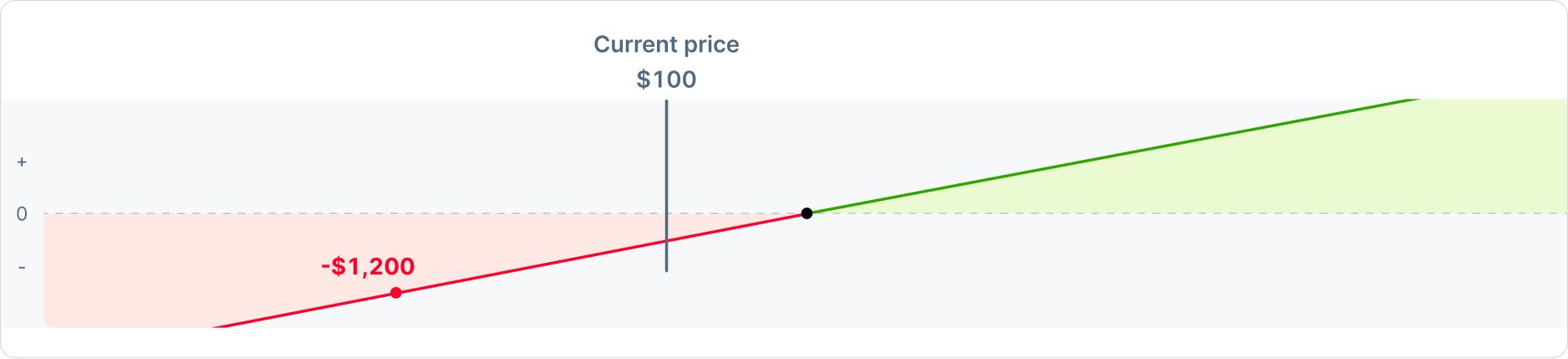
- Total loss: ($100 - $90 + $2) x 100 = $1,200Difference between the strike price and the current stock price, plus the net premium paid
If FlyFit falls to $90 at expiration, the short put may be assigned and losses begin resembling those of owning the stock directly. The premium received helps offset a portion of the loss, but downside exposure remains substantial.
Brokerage services for US-listed securities and options offered through Public Investing, member FINRA & SIPC. Supporting documentation upon request.
The examples used above are fictional, and do not constitute a recommendation or endorsement of any investment.
Options are not suitable for all investors and carry significant risk. Certain complex options strategies carry additional risk. There are additional costs associated with option strategies that call for multiple purchases and sales of options, such as spreads, straddles, among others, as compared with a single option trade.
Prior to buying or selling an option, investors must read the Characteristics and Risks of Standardized Options, also known as the options disclosure document (ODD).
Option strategies that call for multiple purchases and/or sales of options contracts, such as spreads, collars, and straddles, may incur significant transaction costs.
The examples used above are fictional, and do not constitute a recommendation or endorsement of any investment.
Options are not suitable for all investors and carry significant risk. Certain complex options strategies carry additional risk. There are additional costs associated with option strategies that call for multiple purchases and sales of options, such as spreads, straddles, among others, as compared with a single option trade.
Prior to buying or selling an option, investors must read the Characteristics and Risks of Standardized Options, also known as the options disclosure document (ODD).
Option strategies that call for multiple purchases and/or sales of options contracts, such as spreads, collars, and straddles, may incur significant transaction costs.
Options resource center
Options Foundations
Fundamentals
 Chapter 9Long call
 Chapter 10Long put
 Chapter 11Covered call
 Chapter 12Cash-secured putChapter 13Protective putChapter 14Synthetic longChapter 15Synthetic shortChapter 16Covered put
Multi-leg Strategies
Complex